
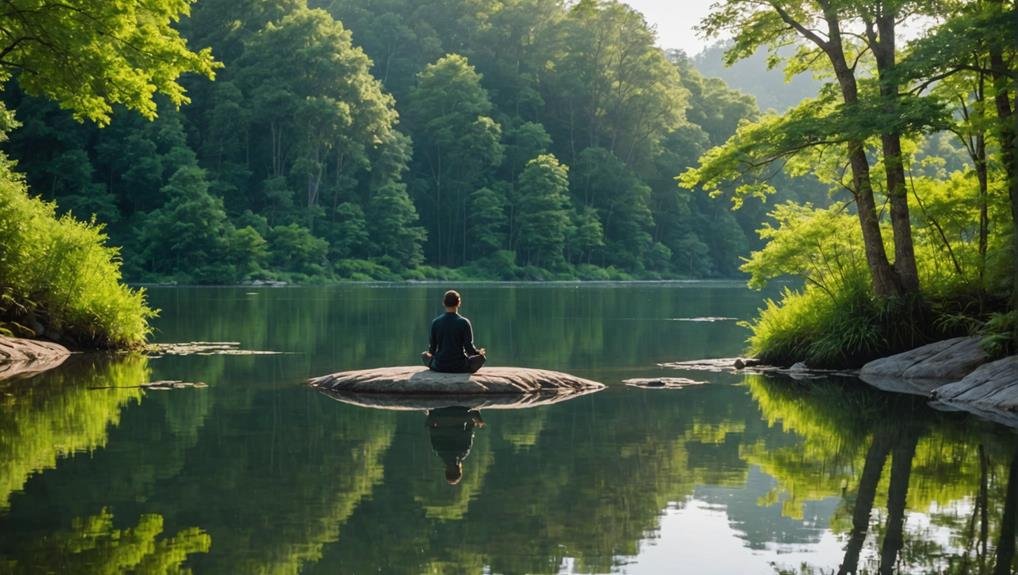
Inner peace refers to a state of mental and emotional calmness, often achieved through various spiritual practices. These practices draw upon techniques with rich historical significance and aim to cultivate a sense of tranquility and balance within individuals.
One of the most recognized methods for achieving inner peace is meditation. Techniques such as Transcendental Meditation utilize mantra repetition to foster emotional balance and clarity.
In addition, mindfulness practices, which include conscious walking and mindful eating, encourage individuals to remain present in the moment, promoting a sense of compassion and connection to the world around them.
Breathing exercises are also essential for cultivating inner peace. When combined with guided visualizations, these techniques can significantly enhance relaxation and self-awareness.
Journaling serves as another transformative tool, providing individuals with an outlet for emotional clarity and reflection on their experiences.
Connecting with nature plays a crucial role in achieving inner peace as well. Practices like forest bathing allow individuals to rejuvenate their overall well-being by immersing themselves in the natural environment.
Complementing these practices are gratitude rituals and yoga, which together enrich an individual's spiritual journey and hint at the deeper insights and connections that await exploration.
Spiritual Insights
- Meditation Techniques: Practices like guided visualization and transcendental meditation promote emotional balance and mental clarity for inner peace.
- Mindfulness Practices: Engaging in present-moment awareness fosters a deeper connection with thoughts and surroundings, enhancing overall well-being.
- Breathing Exercises: Deep breathing techniques facilitate relaxation and stress reduction, contributing to emotional resilience and inner tranquility.
- Gratitude Rituals: Regularly expressing thankfulness through journaling or meditation cultivates positivity and appreciation, leading to a sense of peace.
- Nature Connection: Spending time in nature, such as through forest bathing, enhances spiritual well-being and reduces stress, fostering a sense of belonging.
Meditation Techniques
Meditation techniques are crucial methods for fostering inner peace and enhancing self-awareness. Among these meditation techniques, guided visualization and transcendental meditation are particularly noteworthy due to their distinctive approaches and historical relevance.
Guided visualization, a popular meditation technique, employs imagery and narration to usher practitioners into a profound state of relaxation and mental clarity. This meditation technique has roots in various ancient traditions and actively engages the imagination, promoting tranquility and emotional balance, which makes it especially valuable in modern therapeutic contexts. Additionally, unlocking the power of spiritual meditation can amplify these experiences, empowering individuals to access their inner resources for personal growth and healing through this meditation technique.
In contrast, transcendental meditation is a well-known meditation technique that gained prominence in the 20th century, largely through the efforts of Maharishi Mahesh Yogi. This meditation technique focuses on silently repeating a specific mantra to transcend everyday thought patterns. Not only does this meditation technique foster relaxation, but it also nurtures a deep sense of connection to oneself and the universe, paving the way for personal transformation.
Historically, both meditation techniques have developed within rich cultural frameworks, showcasing the myriad ways humanity seeks to comprehend consciousness and attain inner harmony. By delving into these meditation techniques, individuals can uncover routes to enhanced self-awareness, ultimately leading to a more serene existence in a frequently tumultuous world.
Mindfulness Practices
Integrating Mindfulness Practices
Integrating mindfulness practices into daily life is essential for enhancing the benefits of meditation techniques. Mindfulness practices encourage individuals to develop present-moment awareness, which fosters a deeper connection with their thoughts, emotions, and surroundings. The incorporation of mindfulness practices has been shown to significantly improve emotional well-being and facilitate personal growth, as explored in discussions about the benefits of spiritual meditation.
Mindful eating is one of the prominent mindfulness practices, inviting individuals to savor each bite and transforming the act of eating into a meditative experience. By engaging in mindful eating, individuals not only promote healthier eating habits but also cultivate gratitude and appreciation for nourishment. This aligns with a broader historical context, where food is recognized as an integral part of cultural and spiritual identity, emphasizing the importance of mindfulness practices.
Another key aspect of mindfulness practices is conscious walking, which highlights the importance of being aware of each step taken. Through conscious walking, individuals can focus on the rhythm of their gait and the sensations of their environment, grounding themselves in the present moment. This practice reduces anxiety and enhances overall well-being.
Historically, walking has been regarded as a spiritual pilgrimage in various cultures, symbolizing a journey toward inner peace and self-discovery, further illustrating the significance of mindfulness practices.
Incorporating mindfulness practices into daily routines not only contributes to personal tranquility but also promotes a collective consciousness that values mindfulness, ultimately fostering a more compassionate and aware society.
Breathing Exercises
Breathing Exercises: A Pathway to Inner Peace and Emotional Balance
Breathing exercises are essential for achieving inner peace and emotional balance. These breathing exercises have been recognized across various cultures for their significant influence on mental and spiritual well-being, from the ancient yogic traditions of India to the reflective practices of Christian mysticism.
Utilizing deep breathing techniques, which consist of slow and deliberate inhalations and exhalations, these breathing exercises not only facilitate relaxation but also serve as a means to enhance self-awareness, enabling individuals to reconnect with their inner states.
Furthermore, the practice of breathing exercises can be elevated by incorporating guided visualization. During these breathing exercises, practitioners are prompted to visualize serene scenes or positive affirmations, which deepens the sense of tranquility. This blend of breath control and mental imaging in breathing exercises effectively reduces stress, bolsters emotional resilience, and fosters a grounded perspective towards life's challenges.
Additionally, the broader social impact of these breathing exercises is significant; as individuals nurture their inner peace through these exercises, they often contribute to the cultivation of a more harmonious community.
Journaling for Clarity
Journaling for Clarity
Journaling for clarity is a transformative practice that allows individuals to explore their thoughts and emotions in-depth. This act of journaling for clarity serves as a powerful complement to breathing exercises, providing a structured avenue for individuals to delve into their inner experiences.
Historically, journaling for clarity has been utilized as a means of self-exploration and emotional release, tracing back to practices in various cultures where written expression was seen as therapeutic. In contemporary society, journaling for clarity has evolved into a significant spiritual practice, fostering deeper self-understanding through self-reflection prompts that encourage individuals to confront their innermost concerns and aspirations. By incorporating insights from nurturing spiritual well-being, journaling for clarity can be further enhanced, encouraging individuals to connect with their spiritual journey and personal growth.
The act of writing in a journal not only aids in clarifying nebulous thoughts but also serves as a cathartic outlet for pent-up emotions, making journaling for clarity an essential tool for emotional health. By documenting feelings and experiences, individuals can unravel complex emotional tapestries, thereby promoting mental clarity and emotional stability.
Within this framework, journaling for clarity becomes more than mere documentation; it transforms into a reflective dialogue with oneself, enabling the processing of life's challenges.
Furthermore, the societal implications of journaling for clarity are profound, as it cultivates a culture of introspection and mindfulness. In an age characterized by rapid technological advancement and superficial connections, the discipline of journaling for clarity encourages a return to self, fostering resilience and inner peace through the conscious examination of one's thoughts and feelings.
Nature Connection
Enhancing Spiritual Well-Being Through Nature Connection: A deeper connection with nature significantly enhances our spiritual well-being by fostering peace, harmony, and a sense of belonging. Engaging with the natural world through practices like forest bathing and earth grounding not only nurtures this connection but also leads to spiritual cleansing, which further amplifies our bond with nature.
Nature connection can be articulated through several key dimensions:
- Mindfulness: The practice of nurturing nature connection promotes present-moment awareness, allowing individuals to escape the distractions of urban life. By immersing ourselves in nature, we cultivate a deeper mindfulness that enriches our spiritual well-being.
- Healing: Nature connection is instrumental in healing; studies indicate that spending time in natural settings can reduce stress hormones and enhance emotional resilience, which considerably contributes to our mental health and spiritual well-being.
- Community: Nature connection often serves as a communal space where individuals can gather with like-minded souls. This sense of community fosters a shared purpose and belonging, further enhancing our spiritual well-being through collective experiences in nature.
- Spiritual Awakening: Many individuals report experiencing a profound sense of spiritual awakening through nature connection. This heightened awareness in natural settings allows for a deep connection to the universe, often leading to transformative insights that enrich our spiritual well-being.
Gratitude Rituals
Gratitude Rituals: Enhancing Spiritual Well-Being through Appreciation
Gratitude rituals are practices that focus on expressing thankfulness and appreciation, significantly enhancing spiritual well-being. Incorporating gratitude rituals into daily life can profoundly deepen our appreciation for the present moment. Historical practices of gratitude across various cultures highlight its importance as a powerful tool for cultivating inner peace.
As emphasized in essential tips for nurturing spiritual well-being, gratitude rituals like journaling serve as a foundational exercise, prompting individuals to reflect on and document the aspects of their lives they are thankful for, thus shifting focus from scarcity to abundance.
Furthermore, gratitude rituals can include thankfulness meditation, which offers a contemplative practice that allows individuals to center their thoughts on positive experiences and relationships. This method reinforces emotional resilience and contributes to overall spiritual well-being.
Appreciation rituals, often connected to communal gatherings, create shared spaces for expressing gratitude, thus strengthening social bonds and enhancing collective well-being through the practice of gratitude.
Moreover, integrating kindness practices into daily interactions is another aspect of gratitude rituals, fostering a cycle of positivity. These acts of kindness ripple outward, encouraging a more harmonious society and supporting the core idea behind gratitude rituals.
Finally, the use of positive affirmations within the framework of gratitude rituals can reinforce self-worth and a mindset of appreciation, embedding gratitude deeply within the individual's psyche.
Energy Healing
Energy Healing refers to a range of practices designed to restore harmony and balance within the body, mind, and spirit. Energy healing recognizes the interconnectedness of physical, emotional, and spiritual well-being, drawing from ancient traditions such as Ayurveda and Traditional Chinese Medicine.
Recent insights on nurturing spiritual health illuminate how energy healing contributes significantly to overall well-being and personal growth. Prominent techniques in energy healing include chakra balancing and aura cleansing, which work to realign energies and eliminate blockages that impede personal development.
The effectiveness of energy healing can be understood through several key principles:
- Holistic Approach: Energy healing emphasizes a holistic approach, integrating body, mind, and spirit to foster comprehensive healing.
- Energy Flow: Techniques within energy healing, such as chakra balancing, encourage the unobstructed flow of energy, leading to enhanced vitality and clarity.
- Emotional Release: Aura cleansing, a vital component of energy healing, helps to remove negative energies, facilitating the release of emotional burdens.
- Empowerment: Energy healing empowers individuals to take an active role in their healing journey, promoting self-awareness and resilience.
While energy healing may not always align with conventional medical practices, its historical significance and increasing acceptance signal a societal shift towards holistic health modalities.
This evolution encourages deeper exploration into the relationship between energy healing, spirituality, and psychological well-being, fostering inner peace in a complex world.
Yoga and Movement
Yoga and Movement: A Path to Wellness
Yoga and movement are holistic practices that promote physical, mental, and spiritual well-being. The various styles of yoga, including Hatha, Vinyasa, and Ashtanga, offer distinct methods for cultivating harmony within oneself through the integration of breath control and mindful movement. Engaging in yoga and movement allows practitioners to develop awareness and release tension, enhancing their overall wellness.
Additionally, the incorporation of spiritual practices into yoga and movement can lead to emotional healing and personal growth. Movement therapy, rooted in the principles of yoga, emphasizes the profound connection between bodily movement and emotional expression.
Historically, yoga and movement have not only served as tools for individual development but also as means of building community, reflecting societal values around health and spirituality.
The growing interest in yoga and movement, particularly in Western cultures, has raised important discussions about cultural appropriation and the commercialization of these practices. Despite the significant benefits of yoga and movement, such as increased flexibility, stress reduction, and improved mental clarity, it is essential to honor the historical roots and cultural significance of these traditions.
Affirmations for Peace
Affirmations for Peace: Affirmations for peace are powerful tools that cultivate inner tranquility and foster a positive mindset. Historically rooted in various spiritual traditions, affirmations for peace have been employed to rewire thought patterns, encouraging individuals to embrace self-acceptance and serenity.
By integrating daily affirmations for peace into one's life, practitioners can create a sanctuary of calm amidst external chaos. Additionally, essential tips for nurturing spiritual well-being highlight the importance of consistent practice and self-reflection in enhancing spiritual growth.
To effectively harness the power of affirmations for peace, consider the following strategies:
- Consistency: Engage in daily affirmations for peace, setting aside a specific time each day to articulate peaceful intentions.
- Visualization: Pair affirmations for peace with visual imagery, envisioning the serenity you seek, thereby reinforcing the positive mindset.
- Personalization: Tailor affirmations for peace to reflect individual experiences and aspirations, making them resonate on a deeper emotional level.
- Mindfulness: Practice mindfulness while reciting affirmations for peace, focusing intently on each word's meaning to amplify their impact.
Incorporating these methods not only enhances the effectiveness of affirmations for peace but also deepens their spiritual significance, revealing their potential to foster sustainable inner tranquility in a tumultuous world.
As individuals commit to this practice of affirmations for peace, they may find themselves maneuvering through life's challenges with renewed clarity and resilience.
Mystical Questions
How Long Should I Practice These Spiritual Techniques Daily?
Like a gardener tending to delicate blooms, the daily duration of spiritual practices should be tailored to individual needs, ideally ranging from 15 to 30 minutes, with intensity adjusted according to personal growth and comfort.
Can Spiritual Practices Replace Professional Mental Health Support?
While spiritual practices can enhance well-being and promote mental health, they should not replace professional mental health support. A thorough approach combines both, ensuring individuals receive the necessary tools for addressing complex psychological challenges effectively.
Are There Specific Times of Day for Spiritual Practices?
Engaging in spiritual practices can be optimized by timing. Morning rituals often enhance focus and intention for the day, while evening reflections allow for contemplation and gratitude, fostering a deeper connection to one's spiritual journey.
How Do I Stay Consistent With My Spiritual Practices?
To maintain consistency in spiritual practices, establish clear motivation methods and set achievable goals. Engaging with accountability partners can further enhance commitment, fostering a supportive environment that encourages regular participation and personal growth in your spiritual journey.
Can I Combine Different Spiritual Practices Effectively?
Combining different spiritual practices can be effective; for instance, Sarah engaged in interfaith dialogue while practicing yoga and meditation. This holistic approach enriched her understanding and fostered inner peace, illustrating the potential of integrating diverse traditions.


