
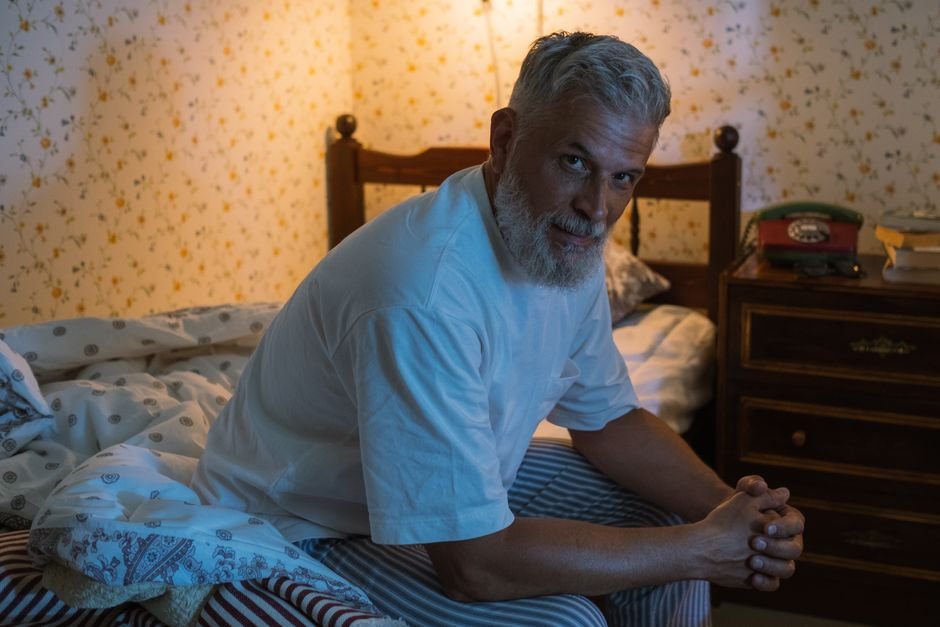
Nothing is literally stuck. The stress response is designed to switch on and off, and when it appears permanent what has usually happened is that the switching-off has stopped being triggered — the threat cues never end, the body stays braced, and the braced state starts to feel like your personality. That is reversible, and it is slower than most of the internet implies: weeks of dull repetition, not one breathing technique. Here is what it looks like, what actually moves it, and what needs a doctor rather than a practice.
A word on framing before anything else. “Stuck in fight or flight” is popular language, not a diagnosis — it appears in no diagnostic manual, and I have no clinical training. What follows is the physiology as described in the research literature, plus what I have found in my own practice, clearly separated. If the symptoms below are severe or getting worse, the paragraph headed when this is not a nervous system problem is the one to read first.
What is actually happening in the body
The acute stress response is fast and metabolically expensive. Sympathetic activation and adrenaline arrive within seconds; cortisol follows over minutes via the HPA axis. Heart rate and blood pressure rise, breathing quickens, blood shifts towards muscle and away from digestion, peripheral vision narrows, and glucose is mobilised. It is a superb short-term system.
It was never built to idle. When activation is prolonged or repeated without recovery, the load itself becomes the problem — what McEwen termed allostatic load, the cumulative cost of a body repeatedly mobilised and inadequately restored. The measurable knock-on effects include disturbed sleep, slower digestion, more inflammatory signalling, and reduced heart rate variability. Lower HRV is one of the few objective markers here: it broadly indexes the parasympathetic branch’s contribution, and it drops under sustained stress.
Two corrections to the way this gets described online. First, the pairing is not fight-or-flight versus calm — freeze and dorsal shutdown are part of the same repertoire, and many people cycling between agitation and collapse are moving between branches rather than staying in one. Second, prolonged stress does not simply mean permanently high cortisol; the pattern is more often a flattened or dysregulated daily curve than a straight elevation, which is why single cortisol readings tell you very little.
Why it does not switch off
The system responds to perceived threat, and perception does not require an event. Four ordinary reasons the off-switch never gets pressed:
The threat is still there. A job, a debt, a household, an illness, a caring responsibility. A braced body in genuinely unsafe circumstances is not malfunctioning, and no breathing exercise fixes a situation. This is the case most often skipped over, and it is the most common.
Thought works as a cue. Rumination and anticipation activate the same machinery as the event. You can be sitting still, safe, and running the physiology of a confrontation. This is why the state outlives the circumstances that started it.
Recovery never gets scheduled. Activation is the default in most lives; downregulation has to be deliberate. Sleep debt, alcohol, caffeine and a phone answering to notifications all keep the system primed.
The state becomes familiar. After long enough, alert feels like normal and calm feels like being unprepared. People describe the first genuinely settled hours as boring, or unsafe. That is the most reliable sign something is shifting, and the reason a lot of people quit at that point.
What it feels like from the inside
Not a panic attack. Panic is loud and brief; this is quiet and continuous, which is why it goes unnamed for years.
- Waking at 4am alert, with the day already assembled in your head
- Jaw and shoulders you only notice are held when someone mentions it
- Reading the same paragraph three times; unable to follow a film without your phone
- Startling at ordinary sounds — a door, a dropped plate — more than seems proportionate
- Rest feeling like a task you are behind on, or actively uncomfortable
- Digestion unreliable, appetite either gone or constant
- Irritability arriving faster than the situation warrants, then guilt about it
- Illness on the first day of a holiday, once the load finally comes off
The pattern I recognise most in myself is the tenth-hour version: still working, no longer producing anything, unable to stop because stopping felt like a decision I had not earned. There is a fuller list of these in signs of a dysregulated nervous system.
How to get out of fight or flight mode
Two separate jobs, and conflating them is why people conclude nothing works. Bringing an activated moment down takes minutes. Changing the baseline takes weeks. The first does not accomplish the second.
In the moment. The most reliable lever is the exhale. Heart rate rises slightly on inhalation and falls on exhalation, so lengthening the out-breath biases the system parasympathetic within a breath or two. The physiological sigh — two inhalations through the nose, the second shorter, then a long slow exhale through the mouth — performed for five minutes daily outperformed mindfulness meditation for mood and reduced respiratory rate in a randomised comparison (Balban et al., Cell Reports Medicine, 2023). Cold water on the face and forearms works too. So does naming five things you can see, which is dull and effective.
For the baseline. Nothing here is interesting, which is the point.
| Lever | What it does | Realistic timeline |
|---|---|---|
| Fixed sleep and wake times | The single largest input; sleep debt keeps the system primed | 2–3 weeks to feel |
| Slow breathing, 5–10 min daily | Raises HRV over time, not just in the session | 3–4 weeks |
| Daily walking, ideally outside | Completes the mobilisation the body prepared for | Days for mood, weeks for baseline |
| Caffeine capped and moved earlier | Removes an exogenous sympathetic driver | 1–2 weeks |
| Strength or interval work | Deliberate activation with a real end, which the system learns from | 4–8 weeks |
| Removing one real stressor | Does more than every technique combined, and is usually the hardest | Immediate to never |
| Trauma-focused therapy where indicated | The only item on this list with strong outcome trials behind it | Weeks to months |
The ordering matters. If sleep is broken, fix sleep before adding practices — everything else works better downstream of it, and a technique layered on four hours a night is a rounding error. More on the daily structure in nervous system regulation and on the specific mechanism in vagus nerve exercises.
How to get out of survival mode
Survival mode is the same physiology described from the outside — the behaviour rather than the sensation. It looks like functioning: the work gets done, the children get fed, the messages get answered. Underneath, everything beyond the immediate has been dropped. No plans, no interests, no forward horizon past this week.
What distinguishes it practically is that it is often accurate. People in survival mode are frequently in circumstances that require it, and being told to regulate their nervous system is both useless and slightly insulting. The route out is usually structural before it is physiological: reduce the load, get one form of help, restore one thing that is not a duty.
The marker to watch for is the return of interest in something pointless — a book, a recipe, a conversation with no purpose. That capacity switches off early and returns late, and it is a better indicator of recovery than how you feel on any given morning.
Two cautions from experience. Coming out of years of this is not comfortable: as the bracing drops, tiredness arrives that was masked by adrenaline, and it can look like getting worse. And the second week is where most attempts fail, because the novelty is gone and the results have not landed yet. Both are covered in signs your nervous system is healing.
When this is not a nervous system problem
Several medical conditions produce exactly this symptom set, and a regulation practice will do nothing for any of them. An overactive thyroid, anaemia, low blood sugar, sleep apnoea, arrhythmias, perimenopause, and the side effects of stimulants, decongestants, thyroid medication or steroid withdrawal all present as constant physical alertness. Anxiety disorders, PTSD and depression overlap heavily too, and have treatments with far better evidence than anything described above.
See a doctor rather than reading more of this if:
- Your resting heart rate is persistently high, or you have chest pain, fainting or an irregular pulse
- You are losing weight without trying, or unusually heat-intolerant
- You snore heavily, stop breathing in your sleep, or wake unrefreshed however long you sleep
- Symptoms began within weeks of starting, stopping or changing a medication
- You are having flashbacks, dissociation or intrusive memories of a specific event
- You are drinking or using something to get through the day
- You have thoughts of harming yourself — contact emergency services or a crisis line now, not a breathing exercise
What the evidence doesn’t support
- That anyone is permanently stuck. The claim is a marketing frame; the physiology is regulatory and responds to changed inputs.
- That a single technique resets the system. Acute downregulation is real and lasts minutes. Baseline change comes from repetition and from removing load.
- Any specific timeline. “21 days to a regulated nervous system” has no basis. What is measurable is that HRV responds to consistent slow breathing over weeks, with wide individual variation.
- That home cortisol or HRV readings can tell you your state. Single cortisol samples are close to uninformative, and consumer HRV is only meaningful as your own trend over weeks.
- That trauma is stored in tissue in a literal sense. Stress physiology is real and well documented; the mechanism claimed by the phrase is not established.
- That being in this state indicates a personal failing. In most cases it indicates a demanding situation and no recovery time.
Common questions
Can your body be stuck in fight or flight?
Not stuck in a mechanical sense, but it can remain activated for long periods when threat cues — real or anticipated — keep arriving and recovery never does. The measurable version of this is sustained sympathetic load with reduced heart rate variability. It responds to changed inputs; it is not a permanent setting.
How long does it take to come out of fight or flight after years?
Honestly, nobody can give you a number, and anyone who does is guessing. What is documented is that HRV shifts with consistent slow-breathing practice over a matter of weeks and that sleep correction shows up within two or three. For a long-standing pattern with an ongoing stressor still in place, months is realistic, and progress tends to be non-linear.
What are the signs you are coming out of it?
Usually unglamorous ones: sleeping through, hunger returning at ordinary times, tolerating quiet without reaching for your phone, and the return of interest in something with no purpose. Many people also feel more tired at first, because fatigue that adrenaline was covering becomes noticeable.
What is the difference between fight or flight and freeze?
Fight and flight are mobilising — heart rate up, energy out. Freeze is the immobilising branch: heaviness, numbness, going blank, difficulty speaking or moving. Many people alternate between them rather than sitting in one, and the practices that help differ, since someone in shutdown generally needs gentle movement and orientation before anything slow or inward. The sequence for that state is set out in how to get out of a freeze response.
Does the fight-or-flight response damage your health?
The response itself is protective and short-lived. The documented harm comes from chronic load without recovery — the allostatic-load literature links it to sleep disruption, cardiovascular strain and inflammatory changes. The distinction is between activation and unrelieved activation.
Can exercise help or does it add more stress?
It generally helps, because it completes a mobilisation the body has already prepared and then ends clearly. The exception is training hard while badly under-slept or under-fuelled, which adds load without recovery. If everything already feels frayed, walking and strength work are the safer starting point.
This article is general information, not medical advice. Nothing here is a substitute for care from a qualified professional, and no practice described should replace prescribed treatment. Sourcing and evidence standards are set out in the editorial policy.