
Ten minutes a day beats an hour on Sunday. The evidence for meditation is strongest for regular practice, and there is no good dose-response research showing that longer sessions produce proportionally larger benefits. The main thing long sessions reliably produce is a schedule you eventually abandon.
Does short meditation actually work?
The honest answer is that we do not know precisely how dose relates to benefit, because almost nobody has run the trial that would tell us. What we have is a body of research on programmes — typically eight weeks, typically 20 to 45 minutes daily — and a set of results that are real but moderate.
The most-cited assessment remains the 2014 JAMA Internal Medicine meta-analysis, which found moderate evidence of improvement in anxiety, depression and pain, and little evidence that meditation outperformed other active treatments. More recently, a trial found mindfulness-based stress reduction performing comparably to escitalopram for anxiety disorders — a genuinely strong result, and one from a full eight-week programme rather than ten minutes on a phone.
So: the benefits are real, they are moderate, and the studied version is more structured than what most people do. Short practice is a reasonable inference from that literature, not a finding within it. I would rather say that plainly than pretend otherwise.
What is the 80/20 here, exactly?
Three things carry most of the value, and none of them require long sits.
Showing up daily. The mechanism being trained is noticing that attention has wandered and returning it. Reps matter more than set length, and a daily ten minutes gives you roughly 300 reps a week.
Practising when calm. The point of the cushion is to make the skill automatic enough to be available when you are agitated. Practice done only in crisis never becomes automatic.
Bringing it off the cushion. The transfer is the whole benefit. Sitting well and reacting identically the rest of the day means nothing has moved.
The 20% that produces very little: exact posture, incense, apps with streaks, comparing session quality, and any concern with whether you are doing it “properly”.
What are you actually training?
Not calm. Calm is a side effect and an unreliable one. What you are training is the interval between a stimulus and your response to it — the gap in which it becomes possible to do something other than the automatic thing.
This matters practically, because it changes what counts as a good session. A sit in which your mind wandered forty times and you noticed forty times is excellent training. A sit in which you felt peaceful throughout is pleasant and trains almost nothing. Most people have this exactly backwards, and then conclude they are bad at meditation because their mind is busy.
Your mind being busy is the equipment working. There would be nothing to practise otherwise.
The protocol
- Ten minutes, same time, every day. Attach it to something that already happens — after the kettle boils, before the first email.
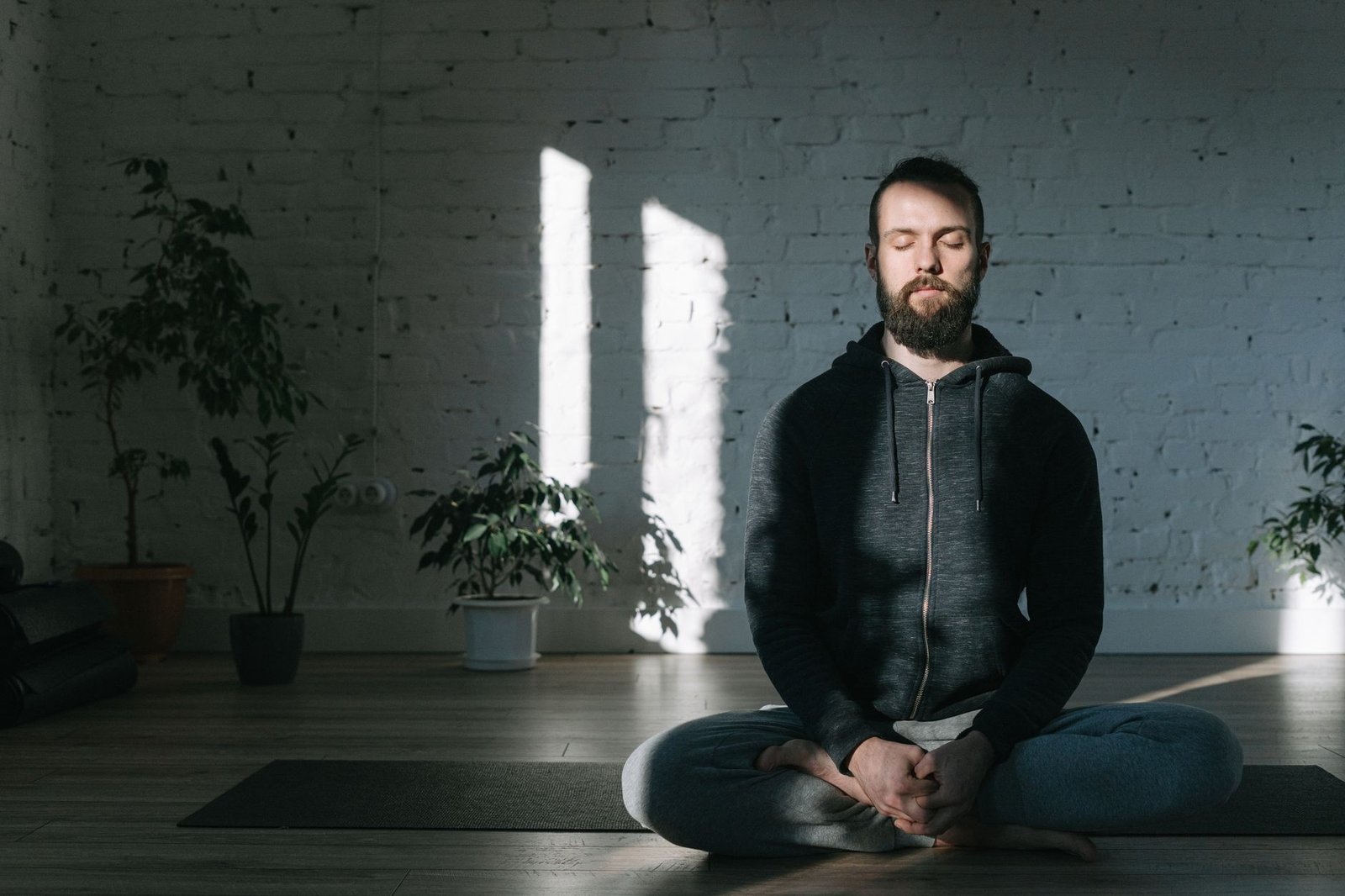
- Sit upright somewhere ordinary. A chair is fine. Nothing about a cushion is load-bearing.
- Attention on the breath at one specific place. The nostrils or the belly. Pick one and stay with it.
- When you notice you have wandered, return. That noticing is the exercise. Do not grade it.
- Add one off-cushion cue. One recurring moment — a doorway, a red light — where you take three slow breaths. This is where transfer happens.
- Change nothing for eight weeks. Then judge it, on how you responded to things, not on how the sessions felt.
If your reason for practising is calming down rather than attention training, the breathing interventions have more direct evidence and work faster. The full picture on meditation is in the meditation guide.
What twenty minutes taught me that ten didn’t
I practised for a long time at around forty minutes, and I want to be fair to it: the longer sits did have a quality the short ones do not. Something settles around minute twenty-five that never appears at minute nine.
What I could not honestly claim is that it made a proportional difference to my life. The stretch where my actual reactivity changed most was a period when I had almost no time and sat for ten minutes daily without missing days. The stretch with the deepest sessions was also, not coincidentally, the stretch where I was most insufferable about practice.
What I do now is ten minutes daily and a longer sit when I feel like it, explicitly framed as something I enjoy rather than something that is working. Removing the productivity frame from the long sits improved both.
What the evidence doesn’t support
- That longer is proportionally better. Not demonstrated. Widely assumed.
- That you need a specific technique. Comparative evidence between mainstream techniques is weak. Consistency dominates choice of method.
- That meditation is risk-free. There is a documented adverse-event literature, mostly associated with intensive practice. Ten minutes a day is low risk; ten-day silent retreats are a different proposition.
- That it beats other treatments. The NCCIH summary is appropriately measured: helpful, not miraculous, not a replacement for care.
- That missing a day undoes progress. Streak mechanics are an app design choice, not a finding.
Frequently asked questions
Is ten minutes of meditation enough?
Enough for the core training, yes — provided it is daily. Ten minutes every day is more useful than an hour twice a week, because the skill is the number of times you notice and return, not the total minutes accumulated.
What if I can’t stop thinking?
Nobody stops thinking, and stopping was never the goal. The instruction is to notice that you have been carried off and come back. If that happens constantly, you are getting more practice than someone who drifts pleasantly for ten minutes.
Do guided meditations count?
Yes, particularly early on. The one caution is that a voice does some of the attention-holding for you, so at some point it is worth practising without it to check the skill is yours.
How long until I notice anything?
Most trials run eight weeks, which is a reasonable expectation for something noticeable in how you respond to stress. Session-level pleasantness varies from day one and tells you very little.
General information, not medical advice, and not a substitute for treatment. If you have a history of trauma, dissociation or psychosis, approach intensive practice cautiously and with professional input. Sourcing standards are in the editorial policy.