
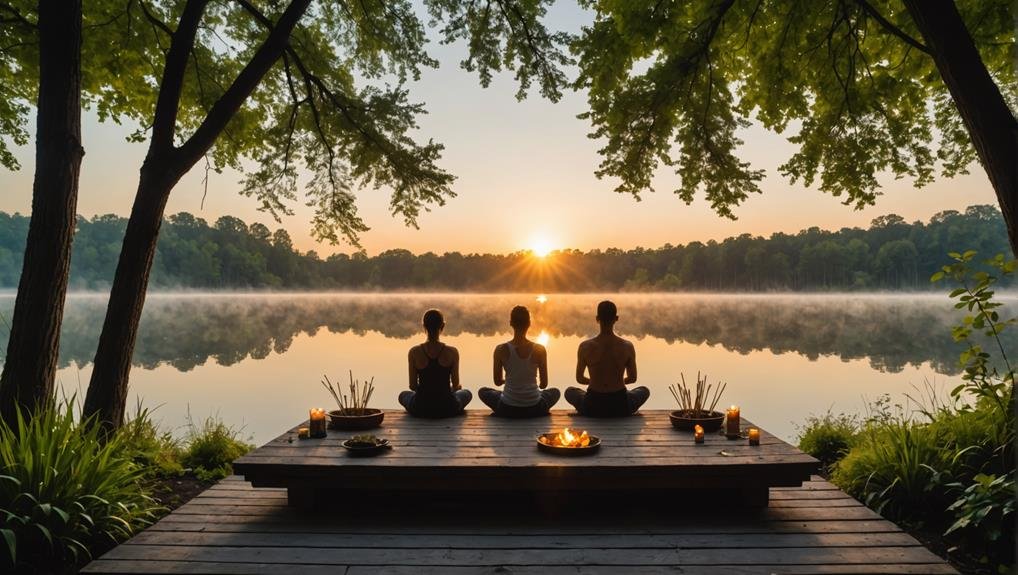
New Age spirituality is a contemporary movement that emerged in the late 20th century, blending Eastern philosophies with Western esotericism. This spiritual approach promotes personal empowerment, holistic health, and a deep sense of interconnectedness among individuals. It draws on various practices and beliefs, emphasizing the importance of self-discovery and emotional well-being.
Rooted in the counterculture of the 1960s, New Age spirituality encompasses key practices such as meditation, chakra balancing, and crystal healing. These practices aim to foster a greater understanding of oneself and the universe, encouraging individuals to explore their inner landscapes and enhance their overall wellness.
While New Age spirituality offers alternative healing modalities and encourages community engagement, it also raises concerns about cultural appropriation and the commodification of spiritual practices. These issues highlight the need for critical examination of the movement's impact on society.
As a result, New Age spirituality significantly influences contemporary perspectives on self-awareness and wellness. Its historical significance and socio-cultural ramifications invite further exploration and reflection on how it shapes our understanding of spirituality and personal growth in today's world.
Spiritual Insights
- New Age spirituality promotes personalized spiritual journeys, emphasizing individual empowerment and self-discovery through diverse practices and beliefs.
- Core practices include meditation, crystal healing, and energy work, which aim to enhance well-being and align personal energies with the universe.
- Mindfulness and meditation foster emotional regulation and self-awareness, encouraging deeper connections with oneself and the present moment.
- Astrology provides insights into personal traits and life experiences, guiding individuals in navigating challenges and fostering personal growth.
- While offering holistic wellness solutions, New Age spirituality faces critiques regarding cultural appropriation and potential avoidance of psychological issues.
Defining New Age Spirituality
New Age spirituality is a diverse spiritual movement that emerged in the late 20th century, emphasizing holistic approaches to personal growth and the interconnectedness of all life. Although it encompasses a wide array of beliefs and practices, it is characterized by a focus on individual empowerment and self-discovery.
Central to this movement is the belief in the interconnectedness of all life, which manifests in practices such as crystal healing and energy cleansing. Embracing spiritual cleansing for fostering emotional well-being is often highlighted within this framework. Crystal healing, for instance, utilizes the vibrational properties of gemstones to promote physical and emotional healing, while energy cleansing involves various techniques aimed at removing negative energy and fostering a balanced environment.
These practices reflect a growing societal emphasis on individual empowerment and self-discovery, suggesting that personal well-being is attainable through these metaphysical tools.
Moreover, New Age spirituality often critiques traditional religious structures, advocating instead for a personalized spiritual experience that transcends dogma. This shift may resonate with individuals disillusioned by conventional religious practices, thereby fostering a sense of community among those who seek alternative spiritual paths.
Historical Background and Origins
Historical Background and Origins of New Age Spirituality
New Age spirituality emerged from a blend of diverse philosophical, religious, and cultural movements in the 19th and 20th centuries, integrating both Eastern and Western influences. This period witnessed the merging of Eastern philosophies and Western esotericism, which together shaped a framework for contemporary spiritual movements. Influences from the counterculture of the 1960s further propelled this synthesis, emphasizing personal transformation and collective consciousness as central tenets.
The following table illustrates key influences on the development of New Age spirituality:
| Influence | Description | Key Aspects |
|---|---|---|
| Eastern Philosophies | Incorporation of ideas from Buddhism and Hinduism | Karma, meditation, enlightenment |
| Western Esotericism | Mystical traditions, including Theosophy and Gnosticism | Spiritual awakening, metaphysical concepts |
| Holistic Health | Emphasis on wellness and interconnectedness | Alternative medicine, mind-body connection |
These historical contexts have fostered an environment where holistic health and metaphysical concepts flourish, encouraging individuals to explore and redefine their spiritual journeys, ultimately aiming for a more profound understanding of self and existence.
Key Practices and Beliefs
Key practices and beliefs in New Age spirituality encompass a broad spectrum of influences that prioritize personal growth, spiritual awakening, and holistic well-being. Central to this movement are practices such as crystal healing and energy work, which proponents argue facilitate personal transformation by aligning the body's energies with the universe.
These methods are often coupled with manifestation techniques, where individuals focus their intentions to bring about desired outcomes, consequently fostering a sense of agency in their lives. New Age spirituality also encourages the exploration of various healing modalities, such as meditation and mindfulness, which can enhance self-awareness and emotional resilience, contributing to overall well-being.
Intuitive guidance plays a significant role, as adherents seek insights from their inner selves or higher consciousness, promoting a unique interpretative lens toward life's challenges. This reliance on personal intuition confirms the movement's emphasis on self-discovery and empowerment.
Additionally, sound therapy, utilizing frequencies and vibrations, is employed to promote holistic health, addressing both mental and physical well-being.
The historical context of these practices underscores a shift from traditional religious structures to more individualized spiritual experiences, reflecting societal desires for autonomy and deeper connections within oneself and the universe.
While the appeal of New Age spirituality is evident, it invites critical scrutiny regarding its implications for community and shared belief systems in contemporary society.
The Role of Meditation and Mindfulness
The Role of Meditation and Mindfulness in New Age Spirituality encompasses practices that promote inner peace and self-awareness, rooted in ancient traditions yet adapted to contemporary life. Many practitioners of New Age spirituality regard meditation and mindfulness as essential tools for fostering inner peace and self-awareness.
Historically, these practices have roots in ancient spiritual traditions, yet their modern interpretations have expanded considerably, reflecting contemporary societal stresses. The benefits of spiritual meditation are manifold, ranging from enhanced emotional regulation to improved cognitive function, thereby attracting individuals seeking relief from the pressures of modern life. As highlighted in the transformative power of meditation, these practices can considerably contribute to personal growth and emotional well-being.
Mindfulness techniques, which encourage a focused awareness of the present moment, have proliferated in various settings, including corporate environments and therapeutic practices. Such widespread adoption underscores a collective yearning for grounding and clarity amid the chaos of daily existence.
Importantly, the integration of mindfulness into mainstream discourse has implications for both individual well-being and broader cultural paradigms, as it challenges conventional notions of productivity and success.
Moreover, the accessibility of meditation and mindfulness practices, often facilitated by digital platforms, democratizes spiritual engagement, allowing diverse populations to explore these transformative tools.
However, it is essential to approach these practices with discernment, recognizing their historical contexts and the potential for commodification, which may dilute their original intents. Consequently, the role of meditation and mindfulness in New Age spirituality invites both introspection and critical examination.
Healing Modalities in New Age
Healing modalities in the New Age movement encompass a variety of alternative practices that promote holistic wellness by addressing the interconnectedness of mind, body, and spirit. Integral to this movement are diverse approaches that not only foster personal well-being but also challenge traditional medical practices in favor of individualized health solutions.
Many individuals find that engaging in practices such as spiritual cleansing can enhance their emotional and spiritual well-being, fostering a deeper connection to their inner selves embrace spiritual cleansing.
Some prominent modalities include:
- Crystal healing
- Energy therapy
- Sound baths
- Aromatherapy practices
- Chakra balancing
Each of these methodologies embodies a unique philosophy of healing. For instance, crystal healing utilizes the vibrational properties of stones to facilitate intuitive healing, while energy therapy focuses on harnessing life force energies to restore overall well-being.
Sound baths offer auditory experiences that promote relaxation and mental clarity, grounding participants in the present moment. Similarly, aromatherapy practices leverage the therapeutic potential of essential oils to enhance emotional and physical health, while chakra balancing aims to align the body's energy centers.
These practices not only reflect a growing societal preference for holistic wellness but also underscore the historical shift towards alternative therapies in the face of modern medical challenges.
As New Age spirituality continues to evolve, its impact on contemporary health practices remains significant, encouraging individuals to explore diverse pathways to healing.
Astrology and Its Significance
Astrology plays a significant role in contemporary New Age spirituality by providing a framework for individuals to explore their inner selves and the cosmic influences that shape their lives. Astrology has emerged as a pivotal aspect of spiritual exploration, serving as a tool for individuals seeking deeper insights into their lives. Through astrological charts and birth charts, practitioners decode the celestial influences that shape personality traits and life experiences, often correlating these with the twelve zodiac signs.
The fundamental belief underpinning astrology is that cosmic energy and planetary alignments at the time of one's birth exert lasting effects on personal growth and decision-making processes. Additionally, astrology can enhance spiritual wellness by fostering self-awareness and personal growth, as it allows individuals to connect with their inner selves and the universe, unlocking spiritual wellness.
In this context, astrology provides spiritual guidance, offering a framework through which individuals can navigate life's challenges and opportunities. The significance of understanding one's astrological profile lies not only in the prediction of future events but also in fostering self-awareness and introspection.
New Age Spirituality in Daily Life
Incorporating New Age Spirituality into Daily Life
Integrating New Age spirituality into daily life promotes a profound connection with both oneself and the universe, facilitating personal growth and holistic well-being. This practice not only fosters self-discovery but also helps individuals uncover greater meaning in their experiences. By embracing spirituality, individuals can enhance their journeys of self-exploration and connect more deeply with their inner selves.
Engaging with a spiritual community offers essential support and motivation, enriching one's ability to practice energy healing and intuitive techniques.
- Embracing manifestation techniques to attract positive experiences
- Utilizing meditation and mindfulness for present-moment awareness
- Participating in workshops for skill development and knowledge expansion
- Exploring the principles of cosmic consciousness to understand interconnectedness
- Incorporating rituals that align with personal values and intentions
The historical context of New Age spirituality highlights a movement toward individualism and a departure from traditional religious frameworks, allowing for a rich tapestry of spiritual expressions.
This evolution carries significant social implications, as it encourages individuals to pursue personalized paths to enlightenment while fostering unity among diverse spiritual practices.
Ultimately, the integration of New Age principles into everyday life acts as a catalyst for transformation, empowering individuals to navigate their realities with intention and awareness.
Criticisms and Misconceptions
Criticisms and Misconceptions
The integration of New Age spirituality into daily practices, while beneficial, is often met with various criticisms and misconceptions that warrant careful consideration. Critics frequently point to issues of cultural appropriation, where elements from indigenous traditions are adopted without a nuanced understanding of their significance, resulting in a commodification that diminishes their original meaning. This commercial exploitation raises ethical concerns about the authenticity of practices marketed for profit, often overshadowing their spiritual essence.
A clearer distinction between religion and spirituality can help illuminate these concerns, as the unique characteristics of each can affect how practices are perceived and integrated. Additionally, the issue of spiritual bypassing—where spiritual beliefs are used to sidestep psychological challenges—can lead to the perpetuation of harmful patterns instead of fostering genuine healing.
There is also a notable skepticism towards science, as some adherents may dismiss empirical evidence in favor of personal anecdotes, resulting in dogmatic beliefs resistant to critical examination. Elitism may emerge within certain New Age communities, raising debates about accessibility for marginalized groups.
Questions of authenticity persist, prompting discussions on the extent to which contemporary practices genuinely reflect their historical roots. Ultimately, these criticisms underscore the importance of a reflective approach to New Age spirituality, encouraging practitioners to engage with its complexities while promoting inclusivity and respect for diverse cultural traditions.
Mystical Questions
How Does New Age Spirituality Differ From Traditional Religions?
What are the key differences between New Age spirituality and traditional religions?
How does the emphasis on individual beliefs in New Age spirituality affect community practices?
In what ways do cultural influences shape the practices within New Age spirituality?
How do traditional religions approach spirituality compared to the eclectic nature of New Age beliefs?
What role do modern interpretations play in the evolution of New Age spirituality?
Can New Age Practices Be Harmful or Dangerous?
Can New Age practices be harmful or dangerous?
What are some examples of cultural appropriation within New Age practices?
How can misunderstanding and disrespect of original traditions manifest in New Age practices?
In what ways can certain New Age practices negatively impact mental health?
What role does proper guidance and awareness play in mitigating potential harm from New Age practices?
Are there specific New Age practices that are more likely to lead to harmful outcomes?
How can individuals engage with New Age practices responsibly to avoid cultural insensitivity?
What Role Does Community Play in New Age Spirituality?
What role does community play in New Age spirituality?
How does the interconnectedness of individuals contribute to collective healing in spiritual practices?
In what ways can sharing experiences within a community enhance personal growth?
What are the benefits of nurturing connections with others in a supportive spiritual environment?
How can diverse perspectives within a community enrich the overall New Age spiritual experience?
Are There Any Scientific Studies Supporting New Age Beliefs?
What scientific studies exist that explore the validity of New Age beliefs?
How do concepts like quantum healing and energy medicine correlate with traditional healing practices?
What are the documented benefits of meditation in relation to holistic wellness?
In what ways do these scientific findings align with ancient wisdom and intuitive practices?
Can personal empowerment and spiritual awakening be measured or quantified through scientific research?
How Can One Get Started With New Age Spirituality?
What are the foundational concepts of New Age spirituality?
How can meditation techniques contribute to mindfulness and inner peace in New Age practices?
What types of crystal healing practices are commonly used in New Age spirituality?
How do specific stones enhance energy and promote emotional balance?
What other practices can deepen one's spiritual journey within the New Age framework?


