
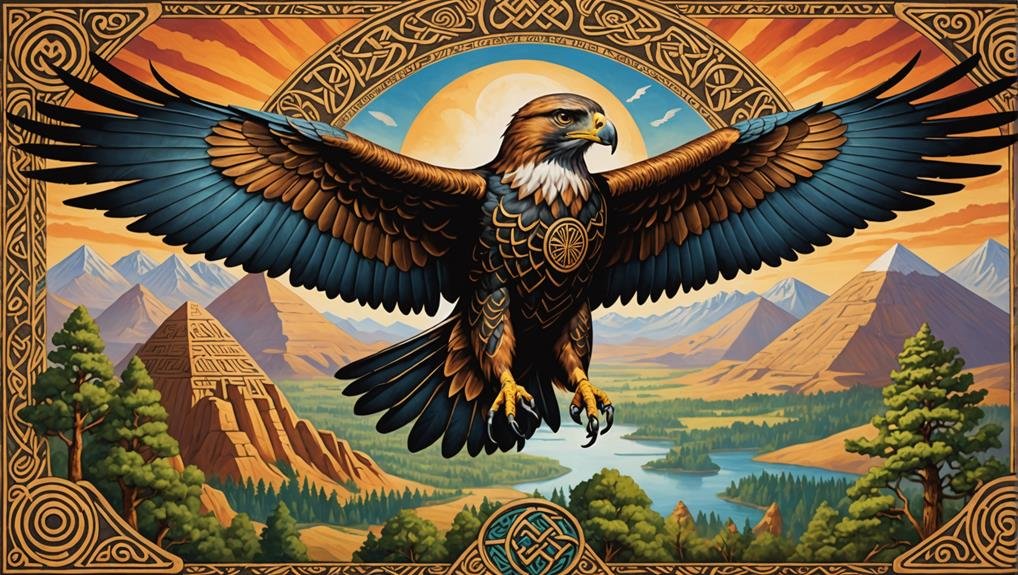
The spiritual significance of hawks encompasses a rich array of meanings across different cultures, reflecting themes of vision, strength, and divine connection. These birds of prey are often seen as powerful symbols, offering insights into the beliefs and identities of various societies.
In Native American traditions, hawks are revered as symbols of guidance and awareness. They are believed to provide direction and clarity, helping individuals navigate their life paths.
Similarly, in ancient Egyptian mythology, hawks represent power, particularly through the god Horus. Here, they serve as protectors and intermediaries, bridging the gap between the earthly and the divine.
Celtic cultures perceive hawks as messengers that unveil hidden truths, reinforcing their role as symbols of insight and revelation.
In contrast, many African tribes view hawks as embodiments of ancestral wisdom and balance, linking them to the spiritual heritage of their communities.
In contemporary interpretations, hawks are often regarded as potent symbols that guide individuals through chaos and encourage deep self-reflection.
This diverse tapestry of meanings illustrates the enduring significance of hawks in human spirituality, highlighting their essential role in shaping cultural identities and belief systems across the globe.
Spiritual Insights
- Hawks symbolize vision and guidance across various cultures, serving as messengers between the earthly and spiritual realms.
- In Egyptian mythology, hawks represent power and divine kingship, associated with gods like Horus and Ra.
- Native American beliefs view hawks as symbols of strength, prompting heightened awareness and connection to universal messages.
- In Celtic traditions, hawks signify insight and intuition, aiding in the exploration of fate and unveiling hidden truths.
- Modern interpretations of hawks emphasize their role as intuitive guides, encouraging self-reflection and deeper connections with nature and the cosmos.
Hawks in Native American Beliefs
Hawks in Native American Beliefs
Hawks are deeply revered in Native American beliefs, embodying vision, power, and guidance. In the context of Native American symbolism, hawks are considered messengers that connect the earthly realm with the spiritual world. Their remarkable eyesight and hunting prowess exemplify clarity and focus, integral aspects of Hawk medicine. Although interpretations of these attributes may vary among tribes, a common theme persists: hawks are seen as symbols of heightened awareness, prompting individuals to pay attention to the messages from the universe.
The significance of hawks extends beyond mere symbolism; they represent the profound interconnectedness of nature and spirituality. In numerous ceremonies, hawk feathers are employed to invoke strength and vision, underscoring the essential role that these birds play in both social and spiritual contexts.
Moreover, the hawk's ability to soar high in the sky serves as a metaphor for aspiration and transcendence, motivating individuals to overcome obstacles. This rich symbolism encourages a deeper exploration of how Native American cultures view their relationship with the natural world, illuminating the vital wisdom that such connections provide in comprehending one's place within the larger cosmic framework.
Egyptian Mythology and Hawks
Hawks in Egyptian Mythology
In ancient Egyptian mythology, hawks were revered birds of prey that symbolized power, protection, and divine kingship. The hawk, particularly represented by Horus, the sky god, is a central figure in this mythology, embodying the attributes associated with the pharaohs who were believed to be earthly representations of Horus. Hawks served as important intermediaries between the realms of the living and the divine, highlighting the significance of hawks in the duality of life and death.
Furthermore, hawks were not only associated with Horus but also with other deities, such as Ra, the sun god, who is often depicted with a hawk's head. This portrayal of hawks reinforces their connection to the sun, symbolizing enlightenment and protection in both the living world and the afterlife.
The keen vision and hunting abilities of hawks were mirrored in the vigilance required of rulers and deities, making hawks a vital emblem in the societal values that shaped ancient Egypt's spiritual and cultural landscape. The enduring significance of hawks in Egyptian mythology illustrates their integral role in the beliefs and practices of the ancient Egyptian civilization.
Significance in Celtic Traditions
Significance of Hawks in Celtic Traditions
Hawks hold profound significance in Celtic traditions, symbolizing insight, intuition, and spiritual guidance. In the rich tapestry of Celtic mythology, hawks are revered as divine messengers, bridging the earthly realm and the spiritual world, thus reinforcing their role as harbingers of knowledge and clarity. The presence of hawks in various myths emphasizes their ability to unveil hidden truths and assist individuals in navigating the complexities of life, making them integral to the exploration of fate and destiny.
Moreover, hawks are regarded as powerful totems in Celtic beliefs, offering spiritual insights and foresight that enable individuals to connect more profoundly with their authentic selves. The symbolism of hawks extends beyond mere observation; it encapsulates the ideals of keen vision and heightened awareness, reflecting the Celts' profound respect for nature as a fountain of wisdom.
The association of hawks with deities such as the goddess Morrigan highlights their significance in rituals and spiritual practices. These magnificent birds are believed to enhance intuitive processes, urging individuals to trust their instincts and face challenges with confidence.
In essence, the significance of hawks in Celtic traditions transcends their physical presence; they serve as vital links to the spiritual dimensions of existence, underscoring the interconnectedness of life, nature, and the divine. Through the lens of Celtic culture, hawks embody not only symbols of power but also essential guides in the journey of self-discovery and spiritual awakening.
Hawks in Ancient Rome
Hawks in Ancient Rome: Cultural Significance and Symbolism
The cultural significance of hawks in Ancient Rome highlights their profound connection to both nature and the divine, serving as powerful symbols of authority, protection, and dominance. In Roman mythology, hawks were frequently linked to the gods, especially Jupiter, the supreme deity, who was thought to dispatch hawks as omens or divine messengers. This bond between hawks and the divine elevated their symbolism in Roman society, embodying qualities such as foresight and vigilance, which were greatly esteemed.
In addition to their mythological importance, hawks were integral to hunting practices, demonstrating their strength and skill. This utility aligned with Roman ideals of control over nature, further emphasizing the significance of hawks in the context of power and dominance. The elite class in Ancient Rome often engaged in falconry, a pastime that underscored their status and sophistication, reflecting the cultural importance of hawks as symbols of authority.
| Symbolism | Cultural Context |
|---|---|
| Power | Associated with Jupiter, the god of the sky |
| Protection | Seen as omens providing guidance |
| Authority | Used in falconry, representing dominance over nature |
The reverence for hawks in Ancient Rome illustrates how deeply intertwined daily life was with spiritual beliefs, showcasing a society that honored the forces of nature while simultaneously striving to master them for human advantage. The enduring significance of hawks in this ancient culture remains a testament to their role as symbols of power, protection, and authority.
Symbolism in Asian Cultures
Hawks as Symbols in Asian Cultures
Hawks are revered across various Asian cultures, symbolizing nobility, strength, and spiritual insight. In Chinese tradition, hawks embody power and dominance, often linked to warriors and leaders who exemplify the foresight and courage essential for success. The representation of hawks in Chinese culture highlights their keen vision, which serves as a metaphor for clarity in decision-making amidst life's complexities.
In Japanese culture, hawks are celebrated as symbols of loyalty and protection. Here, hawks are frequently depicted in art and folklore as guardian spirits, believed to shield homes from misfortune. The cultural significance of hawks in Japan is underscored by the belief that their presence heralds good luck and positive change.
Furthermore, in some Southeast Asian societies, hawks are associated with ancestral spirits, acting as intermediaries between the physical and spiritual realms. This connection emphasizes the role of hawks in rituals and ceremonies, where they are honored for their ability to transcend earthly limitations.
Spiritual Insights in African Tribes
Spiritual Significance of Hawks in African Tribes
The spiritual significance of hawks in African tribes encompasses their role as powerful messengers and totem animals that bridge the earthly and spiritual realms. Within the context of African spirituality, the hawk is not only a symbol of nature but also a carrier of ancestral wisdom, deeply woven into the cultural fabric of tribal beliefs.
The spiritual significance of hawks is highlighted in various tribal rituals, where they embody the essential hunting symbolism that reflects the delicate balance between life and death, sustenance and survival.
As spiritual guides, hawks are revered for their ability to provide insights that extend beyond the physical realm, helping individuals navigate their life paths in harmony with community values. The keen eyesight of hawks and their capacity to soar high symbolize clarity and perspective, inviting individuals to explore deeper understanding of themselves and their surroundings.
Furthermore, the spiritual significance of hawks reinforces the importance of connecting with nature in tribal societies, highlighting the interdependence of all living beings. By honoring the spiritual significance of hawks, African tribes not only preserve their cultural identity but also continue to uphold traditions that resonate with the wisdom of their ancestors, adapting to the challenges of contemporary society.
The Role of Hawks in Shamanism
The Role of Hawks in Shamanism
Hawks serve a crucial function in shamanism, acting as powerful spirit animals that guide practitioners on their journeys of healing and self-discovery. In shamanic practices, hawks are often regarded as animal totems, embodying the essence of vision and insight, thereby facilitating shamanic journeys and vision quests.
These magnificent birds are seen as spirit guides that assist in steering trance states, where practitioners seek to connect with their inner selves and the broader cosmos. As part of a broader understanding of spiritual practices and personal growth, hawks are essential in encouraging individuals to explore their deeper connections to the universe.
The role of hawks in healing rituals is integral, as they symbolize the pursuit of clarity and focus, which are essential for effective dream interpretation and the integration of ancestral wisdom. Hawks facilitate nature connections, reminding individuals of the interconnectedness of all life forms.
As power animals, hawks empower shamans, enhancing their ability to perceive and interpret the messages from the spirit world. Historically, the reverence for hawks in various cultures underscores their significance in the collective understanding of spirituality and healing.
Ultimately, the role of hawks in shamanism illustrates not only their spiritual importance but also their capacity to enrich the human experience through profound insights and transformative practices.
Hawks as Omens in Folklore
Hawks as Omens in Folklore
Hawks as omens in folklore represent a rich tapestry of cultural beliefs and interpretations surrounding these magnificent birds. Observing the behavior of hawks has long captivated various cultures, where hawks are perceived as powerful omens. In folklore tales across numerous traditions, hawks are frequently linked to foresight, intuition, and the ability to transcend the mundane.
Their keen vision and aerial prowess symbolize a higher perspective, allowing hawks to act as messengers or harbingers of significant events. For instance, in Native American traditions, the sighting of a hawk may forewarn of impending changes, urging individuals to remain vigilant and attuned to their surroundings.
In many European cultures, hawks as omens are viewed as indicators of fortune or misfortune, reflecting the duality of nature's signs. The interpretation of hawks as omens often depends on their behavior; a soaring hawk could signal liberation and success, while a hawk's sudden disappearance might suggest caution and introspection.
Thus, the varied representations of hawks as omens in folklore encapsulate a complex interplay between nature and human experience, revealing deep-seated cultural beliefs about destiny, transformation, and the quest for understanding life's mysteries through the lens of these remarkable birds.
Modern Spiritual Interpretations
Modern Spiritual Interpretations of Hawks: The modern spiritual interpretations of hawks encapsulate a blend of ancient wisdom and contemporary beliefs, reflecting their lasting importance in today's spiritual discourse. Hawk symbolism, which is deeply entrenched in various cultures, has adapted to embody essential qualities such as clarity, vision, and heightened awareness in the context of modern spiritual interpretations.
In many indigenous cultures, hawks are revered as messengers from the spirit world, imparting guidance and insight during critical times. This aspect of hawk symbolism highlights its role in modern spiritual interpretations as a beacon of wisdom.
As society grapples with increasing chaos and distraction, individuals are increasingly drawn to hawks, viewing them as symbols of spiritual guidance. In modern spiritual interpretations, the hawk serves as a guide, helping individuals harness its attributes to navigate personal and collective challenges.
The hawk's ability to soar high and attain a panoramic view acts as a powerful metaphor for gaining perspective in life, a key theme in modern spiritual interpretations that encourages individuals to elevate their thinking beyond immediate circumstances.
Moreover, the hawk's acute eyesight embodies an essential principle in modern spiritual interpretations, urging individuals to trust their intuition and stay alert to the subtle signs present in their environment.
In contemporary practices, hawks are frequently incorporated into meditative rituals and personal ceremonies, fostering a deeper connection to nature and the cosmos. This resurgence in the relevance of hawk symbolism underscores a broader cultural shift towards merging ancient spiritual practices with modern existential explorations, highlighting the timeless significance of these majestic creatures in modern spiritual interpretations.
Personal Connections to Hawk Spirit
Personal Connections to Hawk Spirit
The personal connections individuals form with the hawk spirit can be profoundly unique and transformative. For many, the hawk spirit serves as a symbol of intuitive guidance, appearing during pivotal moments in their lives to offer clarity and direction. Across various cultures, the hawk spirit is often seen as a powerful guide, representing vision and insight. These personal connections to the hawk spirit often transcend mere observation; they become spiritual awakenings that prompt individuals to reflect on their life choices and paths.
Historically, various cultures have revered the hawk spirit for its keen vision and ability to soar high above the earth, embodying the duality of groundedness and transcendence. This rich tapestry of symbolism invites individuals to engage in self-exploration regarding the hawk spirit, as they seek to understand what these encounters mean within their own lives. The hawk spirit may act as a messenger, signaling the need for heightened awareness or prompting a deeper connection to one's inner self.
Moreover, the social implications of such personal connections to the hawk spirit are significant, as they foster a sense of community among those who share similar experiences. By discussing and interpreting these encounters with the hawk spirit, individuals can cultivate a shared understanding of the transformative power that the hawk spirit embodies in their lives.
Mystical Questions
How Do Hawks Differ From Other Birds in Spiritual Symbolism?
In the tapestry of avian symbolism, hawks emerge as vigilant sentinels, embodying clarity and focus. Hawk symbolism often contrasts with other birds, while hawk mythology underscores their role as messengers, heralding transformation and insight.
What Are Common Characteristics Attributed to Hawks Across Cultures?
Hawk symbolism often embodies qualities such as vision, freedom, and power. Across various cultural interpretations, hawks are seen as messengers, representing clarity, intuition, and the ability to rise above challenges, highlighting their revered status in many societies.
Can Hawks Serve as Personal Spirit Animals for Individuals?
The striking appearance of a hawk soaring overhead can evoke profound insight. For many, hawk symbolism represents vision and focus, fostering a personal connection that guides individuals through life's challenges, embodying strength and clarity in their journeys.
How Can One Connect With Hawk Energy Spiritually?
To connect with hawk energy spiritually, engage in meditation practices focused on visualizing hawks soaring. Additionally, maintain a dream journal to capture symbolic dreams that may reveal insights and guidance from this powerful spirit animal.
Are There Specific Rituals Involving Hawks in Various Cultures?
Hawk rituals hold cultural significance across diverse societies, symbolizing strength and vision. Various traditions incorporate ceremonial practices, such as offerings and prayers, to honor hawks, reinforcing their revered status as powerful messengers and protectors in spiritual domains.


